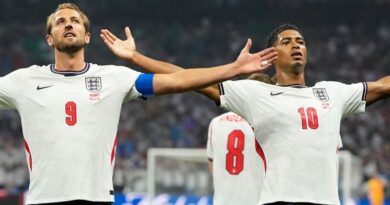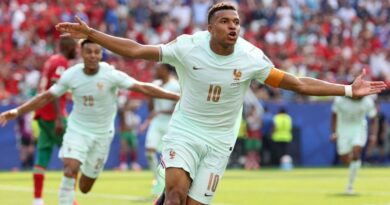
France vs England: Two sides collide in a game no one wanted to play in
The World Cup third-place play-off is often described as the match nobody wants to play. It is a fixture that exists because the tournament demands it rather than because either participant dreamed of reaching it. For France and England, however, there is an undeniable sense that this contest could easily have been Sunday’s showpiece final. Instead, Les Bleus arrive after a frustrating semi-final defeat to Spain, while the Three Lions are still processing the heartbreak of surrendering a lead against Argentina.
Despite the disappointment, there remains genuine motivation. France have the opportunity to give Didier Deschamps a winning farewell in his final match as national team coach, while Kylian Mbappé continues his pursuit of both the Golden Boot and further World Cup scoring history. England, meanwhile, have the chance to finish a largely impressive tournament with tangible reward after falling agonisingly short of another major final. Bronze medals rarely erase the pain of missing gold, but they can still provide validation for a month of consistently elite football. France enter the match as slight favourites according to several predictive models, although the margins remain relatively narrow.
Recent form: France vs England
France progressed confidently through Group I, displaying the balance that has defined much of the Deschamps era. Defensive organisation remained a constant while their attacking quality ensured they finished top of the section, building momentum rather than needing dramatic escapes. That platform carried into the knockout rounds, where they eliminated Sweden before edging past Paraguay in a tightly contested Round of 16 encounter that required patience and discipline rather than attacking flair.
Their quarter-final victory over Morocco perhaps represented France at their most complete. They controlled territory, limited transition opportunities and consistently generated high-quality chances through the pace of Kylian Mbappé and the creativity of Ousmane Dembélé. However, their tournament came to an end against Spain. Unable to consistently break through one of the competition’s best pressing structures, France struggled to impose themselves in the final third and were ultimately beaten by the tournament’s most cohesive possession side.
England
England’s route was considerably less straightforward. The Three Lions topped Group L before being pushed to the brink by DR Congo in the Round of 32. After falling behind, England struggled to establish sustained control for long spells, with their attacking play lacking its usual fluency. It ultimately took Harry Kane’s clinical finishing, as he struck twice, to turn the contest around and secure a hard-fought 2-1 victory. England’s performances improved considerably thereafter. They displayed greater composure and attacking cohesion in a 3-2 victory over Mexico in the Round of 16 before producing one of their most complete displays of the tournament to eliminate Norway 2-1 in the quarter-finals.
Against Argentina in the semi-finals, England looked on course for a place in the final after taking the lead, but the defending champions gradually asserted control through midfield and capitalised on England’s inability to manage the game’s momentum. Argentina’s superior game management and attacking efficiency ultimately proved decisive, leaving Thomas Tuchel’s side to reflect on a missed opportunity after another otherwise impressive tournament.
Key tactical battles & matchups
The defining contest may ultimately take place on France’s left against England’s right. Kylian Mbappé remains the most devastating transition player in international football, but England possess one of the few defensive structures capable of limiting his influence. Whether deployed alongside Kyle Walker or another covering defender, England’s right side must solve one of football’s most difficult tactical problems: preventing Mbappé from receiving isolated against retreating defenders without sacrificing compactness elsewhere.
England will likely attempt to crowd Mbappé’s preferred inside channel, forcing France to circulate possession rather than attack immediately after regaining the ball. That demands exceptional discipline from Declan Rice and Jude Bellingham, whose positioning will be critical in denying passes into Mbappé’s feet before he can accelerate. If England overcommit numbers to that flank, however, France possess the technical quality through Dembélé and Michael Olise to exploit switches of play against an unbalanced defensive block. France’s attacking rotations throughout the tournament have consistently forced opponents into difficult defensive choices rather than relying solely on individual brilliance.
Conversely, England’s greatest attacking weapon may lie between France’s midfield and defensive lines. Jude Bellingham has repeatedly demonstrated an ability to arrive late into dangerous spaces, combining physical dominance with intelligent movement that stretches defensive shapes vertically. France’s midfield trio must decide whether to track those runs aggressively or maintain structural discipline and trust their centre-backs to engage. Either approach carries risk. Step forward too early and Harry Kane gains space to receive between the lines. Hold position too long and Bellingham attacks the penalty area virtually unchecked.
The midfield duel itself should also shape the game’s rhythm. England have frequently controlled matches through Rice’s ball-winning and Bellingham’s progression, while France prefer quicker vertical attacks after regaining possession rather than extended circulation. If England establish sustained territorial dominance, France may become increasingly reliant on direct transitions through Mbappé. Conversely, should France repeatedly break England’s first line of pressure, the game could become far more open than a typical knockout fixture.
Star quality exists across virtually every line. Mbappé remains France’s decisive figure, supported by Dembélé’s creativity, Mike Maignan’s reliability in goal and William Saliba’s composure in defence. England counter with Kane’s penalty-box intelligence, Bellingham’s complete midfield profile, Rice’s defensive authority and Bukayo Saka’s ability to stretch opposing back lines. Both teams possess enough individual quality to decide matches independently, yet the tactical balance suggests collective organisation will ultimately prove more significant than isolated moments of brilliance.
An additional subplot surrounds motivation. Third-place matches often become stretched because defensive intensity naturally declines after the emotional exhaustion of semi-final defeats. That could favour attackers, particularly players still chasing individual honours. Mbappé’s Golden Boot pursuit and Kane’s own scoring ambitions create further incentive for both teams to attack whenever opportunities emerge, potentially producing a more entertaining contest than the occasion’s reputation usually suggests.
Final verdict & prediction
Although neither side envisioned finishing their World Cup campaign here, the quality on display should ensure this is considerably more than a ceremonial conclusion. France perhaps possess the slightly higher ceiling, particularly in transition, where Mbappé remains virtually impossible to contain over ninety minutes. England, however, have arguably demonstrated greater tactical consistency throughout the tournament and possess enough midfield control to dictate significant periods of possession.
Ultimately, the match may be decided by which defence better manages moments of transition rather than sustained pressure. France have consistently looked more dangerous when games become stretched, while England generally appear stronger in structured phases. Given the emotional nature of the fixture and the likelihood of more open football than either side would normally prefer, chances should arrive at both ends.
France’s superior attacking explosiveness, combined with Mbappé’s motivation to finish the tournament on a personal high and Didier Deschamps’ desire to end his tenure on a winning note, gives Les Bleus a slight edge. England should create opportunities through Bellingham and Kane, but France’s ability to convert transitional moments into clear scoring chances could prove decisive. Nevertheless, if England can reproduce the controlled, disciplined performances they produced against Mexico and Norway rather than the laboured display against DR Congo, they possess more than enough quality to trouble France and make this an evenly contested encounter.
Prediction: France 2-1 England